
5 Basic Tastes
FOODS
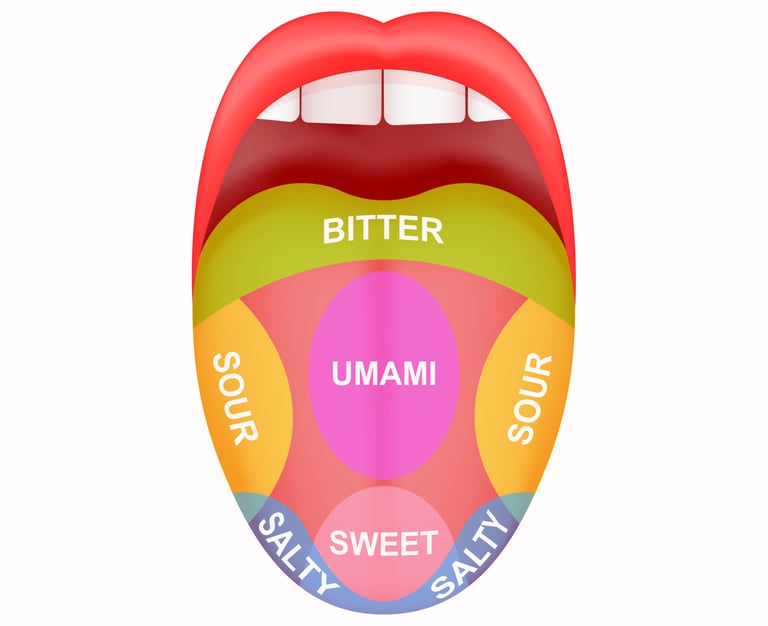
These five basic tastes are detected by taste buds on the tongue. Taste buds are small bumps on the tongue that contain taste receptors. When food comes into contact with taste buds, the taste receptors send signals to the brain, which interprets the signal as different tastes.
5 Basic Tastes
Sweet
Ah, Sweet. This is the taste that defines birthday cake, rewards, and perhaps a large portion of our modern diet. The sweet sensation is arguably the most fundamental and universally appealing flavor to the human palate. Why do we love it so much? Because we are biologically hardwired for it!
Evolutionarily speaking, sweetness signaled energy and safety. In nature, sweet foods meant ripe fruit, tubers, or honey—the quickest and most efficient fuel sources (glucose, fructose, etc.) needed by our energy-hungry brains. Your tongue is packed with specialized receptors designed to shout, "Yes! Eat this! It is good!" when sugar hits them.
Think of the perfect examples:
A crisp, juicy apple fresh off the tree.
The warm, syrupy rush of maple syrup on pancakes.
The immediate dopamine hit from a square of milk chocolate.
Interestingly, this primal urge for quick energy is why we struggle so much with modern candy aisles. Our ancient brains think we've just hit the jackpot, signaling feast time. So, next time you reach for that second cookie, just remember you're not indulging; you're simply honoring your primal, survival-based, energy-seeking roots!
Salty
If Sweet is the taste of comfort, Salty is the taste of necessity. We love the satisfying crunch of a potato chip or the savory flavor of cured ham, not just because they taste good, but because our bodies literally depend on this flavor. The primary compound responsible is sodium chloride (table salt).
Why is this so critical? Salt is an electrolyte, meaning it is essential for major biological functions like nerve signaling, muscle contraction, and maintaining the fluid balance that keeps us alive. In fact, our sense of salty taste evolved specifically to ensure we consumed enough sodium to survive, especially in environments where it might have been scarce.
Think about what makes these foods irresistible:
The crunch and flavor explosion of pretzels.
The curing magic of bacon.
The addictive bite of a perfectly salted caramel.
The only problem is that in the modern world, salt is too easy to find. Our ancient cravings for that vital sodium often lead us to overconsume it, turning a necessary mineral into a modern health headache. But hey, without it, our neurons wouldn't fire, so let's raise a perfectly salted margarita to essential minerals!
Sour
If Sour had a warning label, it would read: "Caution: May cause puckering and involuntary facial contortions." Sourness is the taste sensation triggered by acids (like citric acid in lemons or lactic acid in yogurt) and is essentially your tongue's way of detecting the presence of hydrogen ions (H+) in a substance.
Why do we have this reaction? Evolutionarily, the sour taste served as a crucial warning. Extreme sourness can indicate a food is unripe, spoiled, or potentially toxic, although mild sourness signals beneficial vitamins and fermentation.
Think about the classic examples that make your eyes water:
The immediate jolt from a wedge of lemon.
The refreshing tang of a green apple or lime.
The complex bite of sour cream or pickled vegetables.
We may chase that thrilling tartness in a sour candy, but our initial reaction is always that physical alert, ensuring we process it carefully. It's the only basic taste that makes a visible, hilarious difference in your face, reminding us that sometimes the best flavors come with a sharp little shock!
Bitter
If sweet tastes trigger pleasure, bitter tastes trigger caution. We are exquisitely sensitive to bitterness; in fact, the human tongue has far more receptors dedicated to bitter compounds than to any other basic taste. This is because bitterness is nature's original warning sign, often indicating the presence of alkaloids—many of which are highly toxic or poisonous (think plant toxins).
While bitterness is a warning, it's also highly valued in many adult food and drink experiences. We've learned to love mild bitterness because it adds complexity and depth.
Consider these complex bitter favorites:
The sharp, cleansing flavor of coffee.
The refreshing bite of tonic water (thanks to quinine).
The rich, dry complexity of dark chocolate.
The herbaceous, sharp kick of craft beer hops.
In short, your tongue's bitter receptors are your personal, highly sensitive defense system. We spend our adult lives enjoying substances like coffee and beer that, to our ancestors, might have screamed "Danger!" It proves that sometimes the most complicated relationships are with our favorite flavors.
Umami
For centuries, Western science recognized only four basic tastes: Sweet, Salty, Sour, and Bitter. But then came Umami. This fifth, essential taste was officially identified by Japanese chemist Kikunae Ikeda in 1908, though it took decades for the Western world to fully accept it. Umami translates roughly from Japanese as "pleasant savory taste" or "deliciousness."
What triggers it? Umami is detected by our receptors when they interact with glutamate, an amino acid found naturally in many proteins. It signals that a food is rich in protein and nutrients, essentially telling your body, "This is dense, satisfying fuel!" It’s the flavor of depth and lasting savory satisfaction.
Think of the foods that define this taste:
The intense richness of aged Parmesan cheese.
The deep flavor of mushrooms.
The brothlike, lasting flavor of soy sauce and miso.
The satisfying tang of a perfectly ripe tomato.
Umami is the reason great cooking tastes great. It’s not just a taste; it’s the secret ingredient in almost every delicious savory dish you’ve ever had. It proves that there’s a whole dimension of flavor that many chefs were using for centuries before science gave it a name!

So there you have it: the five basic tastes that shape everything we eat and drink. We've explored Sweet, the primal lure of energy; Salty, the critical signal for necessary electrolytes; Sour, the sharp, refreshing jolt of acidity; Bitter, the evolutionary guard dog warning us away from toxins; and finally, Umami, the savory secret weapon that signals deep, lasting deliciousness.
These five simple sensations are the building blocks of every culinary masterpiece, from a perfectly balanced soup to a complex piece of chocolate. The next time you sit down for a meal, take a moment to appreciate the sophisticated symphony happening on your tongue. It’s an ancient, evolved system that allows us to find nourishment, avoid poison, and, most importantly, enjoy the sheer deliciousness of life.
Now that you know the players, what is your favorite basic taste and why? Let me know in the comments!