
Crazy Phenomena Around the World
FACTS
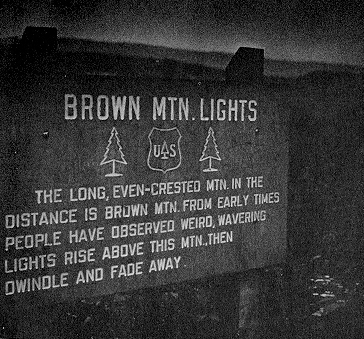
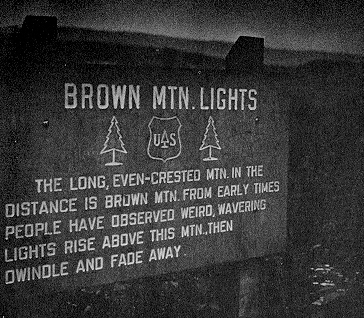
The Brown Mountain Lights are a fascinating mystery, and they continue to attract people from all over the world. Who knows what they really are?
5 crazy phenomena around the world
1. The Dancing Plague of Strasbourg
Alright, let's kick things off with a historical head-scratcher that's equal parts fascinating and terrifying: The Dancing Plague of Strasbourg: When a City Just Couldn't Stop Moving (Literally!)
Picture this: it's the summer of 1518 in Strasbourg, France. Suddenly, a woman named Frau Troffea steps into the street and starts…dancing. Not a graceful waltz or a lively jig, mind you, but a frantic, uncontrollable, almost violent dance. And then, things get really weird.
Within a week, dozens more people join her, compelled by some unknown force to dance uncontrollably. Within a month, the dancing plague has gripped the city, with hundreds of people flailing and writhing in the streets. Exhaustion, dehydration, and even heart attacks become commonplace as people literally dance themselves to death. Yeah, it isn't as comical as it sounds.
So, what the heck was going on?
Here's what we know (and what we don't):
The Details Are Disturbing: Accounts from the time describe people dancing for days on end, seemingly immune to pain and exhaustion. Some reportedly danced until their bones broke. It was not a party.
The Authorities Were Perplexed (and Tried Some Bizarre Solutions): City officials, baffled by the phenomenon, initially believed that the dancing was caused by "hot blood" and prescribed more dancing as a cure. They even hired musicians and set up dance floors, hoping to encourage the afflicted to dance it out. Yeah, that did not work.
Possible Explanations (None Are Entirely Satisfying): Over the centuries, various theories have been proposed to explain the dancing plague, including:
Ergot poisoning: Ergot is a fungus that can grow on rye and other grains. When ingested, it can cause hallucinations, convulsions, and other neurological symptoms. However, this theory is disputed because ergot poisoning typically causes other symptoms that weren't reported during the dancing plague.
Religious fervor: Some historians believe that the dancing was a manifestation of religious hysteria, fueled by stress, famine, and superstition. People have always taken religion seriously, but this is taking it to the next level.
Mass psychogenic illness: This is the most widely accepted theory. It suggests that the dancing was a form of mass hysteria, triggered by extreme stress and anxiety.
The Mystery Remains (We May Never Know the Truth): Despite the various theories, the exact cause of the dancing plague of Strasbourg remains a mystery. It's a chilling reminder of the power of the human mind and the strange and unpredictable ways that stress and fear can manifest themselves.
The Dancing Plague of Strasbourg is a truly bizarre and unsettling event in history. It's a reminder that sometimes, the most inexplicable phenomena are the ones that are most deeply rooted in human psychology. And maybe, just maybe, a little bit of dancing is good for the soul, just not when you can’t stop, or you know, drop dead.
2. The Hum
Can You Hear That? The Freaky, Worldwide Mystery of "The Hum"
If you're reading this, congrats! You're probably one of the vast majority of people who don't hear The Hum. But for an estimated 2-4% of the global population, this isn't an academic mystery—it's a pervasive, low-frequency torture that won't shut up.
Imagine the sound of a distant, idling diesel truck, or perhaps a colossal, subterranean drone. Now, imagine it's always on, audible mostly indoors, especially at night, and seems to vibrate through the very walls and floors of your home. That's The Hum, a baffling acoustic phenomenon that has driven perfectly sane people to distraction, anxiety, and even unfortunately, worse.
A Hum by Any Other Name...
This isn't just one localized incident; it's a global phenomenon, often nicknamed after the area where it's loudly reported: the Taos Hum (New Mexico), the Bristol Hum (UK), or the Windsor Hum (Canada). The common thread? A persistent, low-frequency sound—usually in the 30-80 Hz range—that is heard by a select group of "hearers," while everyone else nearby hears absolute silence.
The effect is deeply weird. Hearers report physical symptoms like headaches, nausea, dizziness, and intense sleep loss. The hardest part? Being constantly told it’s "all in your head" by people who genuinely can't perceive the noise. It’s the ultimate gaslighting from reality itself.
The Suspects: From Fish to Freight Trains
Scientists and researchers have been chasing this ghost noise since reliable reports started popping up in the 1970s, and they still don't have a single, definitive answer. The main theories fall into two major camps:
1. It's Something Real (External/Environmental):
Industrial Noise: Local Hums have occasionally been traced back to nearby factories, giant ventilation fans, or industrial machinery. For example, the Windsor Hum may have originated from a steel plant on Zug Island near Detroit (though shutting down one potential source didn't always make the Hum vanish).
Infrastructure: Theories suggest high-pressure gas pipelines, ultra-low-frequency (ELF) radio signals used to communicate with submarines, or even the resonant effects of ocean waves hitting continental shelves could be the source.
Horny Fish (Seriously): In some coastal areas, a species of fish called the midshipman is known for emitting a loud, hours-long mating call that can resonate through boat hulls and homes. If a town's mystery is solved by amorous aquatic life, that's just hilarious.
2. It's Something Internal (Physiological):
Tinnitus: This is the most common medical dismissal, the perception of noise (ringing, buzzing) when no external sound is present. However, the Hum is generally described as being much lower-pitched and more of a pulsing drone than typical tinnitus.
Spontaneous Otoacoustic Emissions (SOAEs): Some people's inner ears (cochleas) spontaneously generate faint sounds. While interesting, it doesn't fully explain why the Hum is location-specific and often described as vibrating through the body.
Hypersensitivity: Perhaps "hearers" have an unusually low threshold for background sounds that the rest of us actively tune out—the constant low-frequency thrum of modern life (traffic, electricity, the hum of the Earth).
The truth remains elusive. The Hum is a perfect, modern mystery: a noise that's ruining lives, yet seems to defy every attempt to record, locate, or definitively explain it.
3. The Brown Mountain Lights
The Appalachian UFO: What the Heck Are the Brown Mountain Lights?
In the misty, ancient Blue Ridge Mountains of North Carolina, there's a squat, unassuming peak named Brown Mountain. And for centuries, this mountain has been throwing the ultimate, low-key, light show that science simply can't explain. Move over, Hollywood special effects, because we're talking about the baffling, beautiful, and utterly bizarre phenomenon known as the Brown Mountain Lights.
A Ghostly Light Show in the Hills
Imagine staking out a chilly overlook (like the aptly named Wiseman's View) on a moonless night. You're bundled up, sipping lukewarm coffee, and staring into a vast, dark gorge. Then, it happens.
Out over the ridge, a light appears. Sometimes it's white, sometimes red, blue, or a flickering yellow. It can look like a tiny distant star, or a floating, softball-sized orb. Then it starts to move. It might hover, gently drift, pulse in brightness, or even—according to some truly wild reports—split into two lights before vanishing.
These are not your typical fireflies. They are persistent, unpredictable, and they’ve been recorded since the 1700s, long before car headlights or even the electric lightbulb existed. Which means the scientific explanation can’t just be: "It's a really confused Uber driver."
Who's Behind the Cosmic Lanterns?
When scientists can't figure something out, the local folklore usually steps in with some much more dramatic (and sometimes depressing) theories. The Brown Mountain Lights have a great line-up of supernatural suspects:
The Eternal Search Party (Native American Legend): The most romantic tale says the lights are the lanterns of Cherokee or Catawba maidens forever searching for their lovers who fell in a great, legendary battle fought on the mountain centuries ago. (Aww, a ghostly glow-up for lost love!)
The Ghost of a Slave: A popular bluegrass song attributed the lights to the lantern of a "trusty ol' slave" searching for his lost master. (A lovely melody, but maybe let's ditch the problematic history and focus on the floating balls of light, okay?)
The Murder Mystery: Other dark stories claim the lights are the vengeful spirits of a murdered woman and her baby, seeking justice against a terrible husband.
Science Fails to Turn On the Lights
Of course, academics and government geologists have tried to bring some cold, hard logic to the spectacle.
The Great Headlight Hoax: Early in the 20th century, a U.S. Geological Survey famously declared the lights were just distant train and car headlights reflecting off the atmosphere. The theory was immediately thrown into the gorge when, a few years later, a massive flood washed out the roads and railway tracks... and the lights kept appearing. Take that, rationalists!
The Ball Lightning / Plasma Theory: This is the current favorite among skeptics. The idea is that the unique geology of the area causes a rare atmospheric phenomenon, perhaps a form of ball lightning or electrically charged plasma orbs that hiss and float. It’s a scientifically plausible explanation, but one that is notoriously hard to replicate or prove.
Swamp Gas: The classic "it's just swamp gas" theory is a go-to for many ghost lights, but here's the kicker: Brown Mountain doesn't have a swamp. So unless there's a phantom bog hidden somewhere, this one is out.
Whether it’s the heartbroken ghosts of warriors, some kind of rogue natural electricity, or just an elaborate, centuries-long prank by the mountain itself, the Brown Mountain Lights remain one of America's best, most beautifully baffling unsolved mysteries.
4. The Bermuda Triangle
Where Ships Go to Die The Overhyped Yet Enduring Mystery of The Bermuda Triangle
The Bermuda Triangle, also gloriously nicknamed "The Devil's Triangle," is perhaps the most famous geographical boogeyman in history. It's a loosely defined, vaguely triangular region in the western North Atlantic usually said to be bounded by Miami, Bermuda, and Puerto Rico where an abnormally high number of ships and planes allegedly vanish without a trace.
If the stories are true, this region is basically an oceanic vacuum cleaner run by angry ghosts, aliens, or maybe just a really, really aggressive patch of seaweed that has it in for human transportation.
The Legends That Sank a Thousand Ships and Planes
The mystery didn't really explode into pop culture until the mid 20th century, but a couple of incidents cemented the Triangle’s reputation as the place you definitely don't want your GPS to glitch:
Flight 19 (1945): This is the flagship case. Five US Navy torpedo bombers on a routine training flight vanished after the flight leader, Lieutenant Charles Taylor, reported that his compasses were completely malfunctioning. One of the last chilling radio messages allegedly stated "We cannot be sure of any direction... everything is wrong... strange... the ocean doesn't look as it should." A massive rescue plane sent to find them also disappeared. It's like the ocean was actively trolling the search party.
The USS Cyclops (1918): The single largest loss of life in US Navy history not directly related to combat. This massive Navy supply ship vanished somewhere between Barbados and Baltimore with over 300 people aboard. No wreckage, no distress signal, no definitive explanation.
The Mary Celeste Wannabes: There are countless tales of vessels found completely abandoned, sails set, coffee still warm, but not a single crew member in sight. While some of these stories are definitely exaggerated, the "ghost ship" element remains a central part of the whole spooky legend.
The Ultimate Buzzkill Why It's Probably Not Aliens
Despite the terrifying legends of time portals, magnetic anomalies that drive pilots mad, or the crystal energy of the lost city of Atlantis causing trouble, most experts including the US Navy and the US Coast Guard have basically said, "Nah."
Here's the logical truth that makes for a less exciting movie script:
It's a Freeway Not a Graveyard: The Bermuda Triangle is one of the busiest shipping lanes and flight paths in the world, connecting the Americas, the Caribbean, and Europe. Since so many vessels pass through it, it naturally has a higher raw number of accidents than less traveled areas. Imagine a major city highway—it has more fender benders than a dirt road, but you don't call it a paranormal vortex.
The Environment is Brutal: This region is a hotbed for tropical storms, sudden hurricanes, and rapid weather shifts thanks to the powerful Gulf Stream. If you combine a sudden, violent storm with older ships or small planes, things are going to sink and the Gulf Stream will swiftly carry away any wreckage, making clean up impossible.
Methane Gas Bubbles: One slightly cooler scientific theory involves massive fields of methane hydrates trapped in the seabed. If seismic activity causes a large pocket of this frozen gas to erupt, it creates giant bubbles. As the gas rises, the water above it becomes frothy and far less dense, causing ships to lose buoyancy instantly and sink like a stone. Oceanic flatulence!
Human Error The Real Villain: When you factor in all the real challenges the world's deepest trenches, the shallow reefs, the fast currents, and the fact that people sometimes make bad navigational decisions most of the disappearances become far less mysterious.
The biggest mystery of the Bermuda Triangle isn't the disappearing ships it's how a relatively normal number of accidents got turned into a worldwide myth by sensationalist authors!
5. The Voynich Manuscript
The Five Hundred Year Old Book That Broke Every Codebreaker
If you ever want to stump a linguist, a historian, and a top flight World War II codebreaker all at once, just hand them the Voynich Manuscript. This thing is famous for being the most mysterious book in the world, and honestly, the title is well earned. It’s a centuries old puzzle wrapped in a riddle written in an alien language and illustrated by someone who was clearly having a very strange day.
Discovered in 1912 by Polish book dealer Wilfrid Voynich, this parchment codex immediately captivated everyone because it is roughly 240 pages of total nonsense.
The Problematic Pictures
The manuscript is beautifully illustrated, which is great, except the pictures only make the whole thing weirder. It’s broadly divided into a few sections:
The Botanical Section: This is the longest part, filled with illustrations of over 100 plants. The issue? None of these plants actually exist. They look like something you’d find if a fern hooked up with a pineapple and grew a root system powered by static electricity.
The Astronomical Section: Here you find lovely circular charts, zodiac symbols, and astrological diagrams. So far so normal, right? Except these charts feature dozens of tiny, naked, usually crowned women linked to stars by strange cords. It’s definitely not your typical Farmer's Almanac.
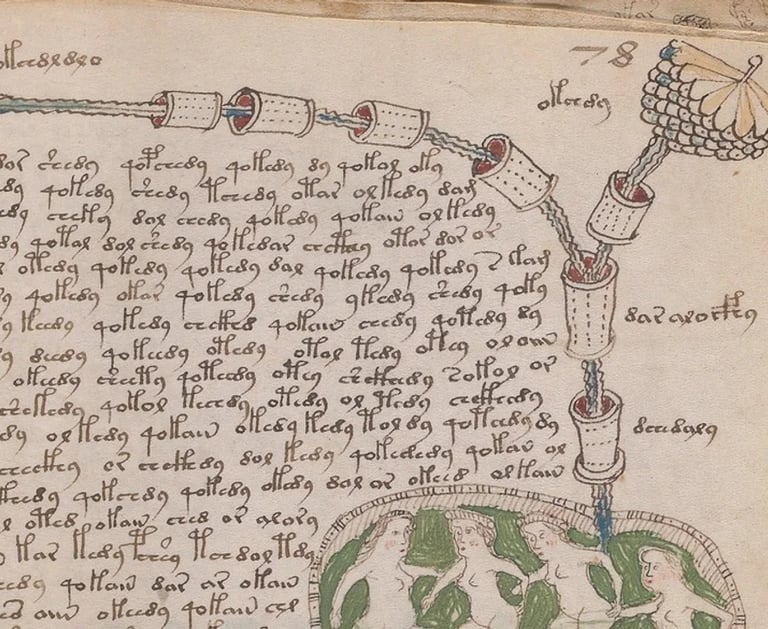
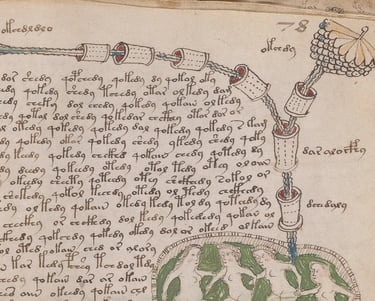
The Balneological Section: This is often called the 'Biological' section. It's filled with complex diagrams of pipes, pools, and green fluids, all swirling around more groups of small, often naked women. They look like they are bathing or maybe just hanging out in the world’s most confusing plumbing system.
It's tempting to think the book must be a medieval herbal guide or an alchemist's recipe book, but the sheer fantastical nature of the imagery suggests the author either had an incredible imagination or was tripping on one of his own unidentified herbs.
The Undecipherable Text
Then there's the text. Every single word is written in a bizarre, flowing script known as "Voynichese." It looks like a real language. It flows from left to right, words are separated by spaces, and linguistic analysis suggests it follows certain statistical patterns similar to real languages.
However, despite centuries of effort, absolutely no one has managed to translate it.
We're talking about brilliant cryptographers who successfully cracked enemy codes in both World Wars trying to solve this thing and failing spectacularly. The theories about what the language is are endless:
Is it an actual language written in a unique cipher?
Is it a constructed language like something J R R Tolkien would invent?
Is it a form of steganography where the real message is hidden within the characters themselves?
Is it just a beautiful, elaborate, five hundred year old hoax designed to trick wealthy book collectors?
The parchment itself was carbon dated to the early 15th century, which helps rule out the "modern hoax" theory, but it still leaves us with a book that refuses to cooperate.
The Voynich Manuscript sits today at Yale University, a beautiful, confusing relic that exists only to remind us that sometimes, the biggest historical mystery is a pile of paper that refuses to shut up.
The Voynich Manuscript remains one of the most mysterious books in the world. Its origins, purpose, and meaning are all unknown, and it is likely that they will remain so for many years to come.

The End of the World's Weirdest Field Trip
So there you have it. We've surfed the most traveled shipping lane in the world (The Bermuda Triangle), visited the site of the greatest unintentional dance battle in history (The Dancing Plague), gotten an earful of global acoustic misery (The Hum), stared down a ten foot tall alien that smells like a bad decision (The Flatwoods Monster), and tried to read a five hundred year old book written by either a genius or a massive hoaxer (The Voynich Manuscript).
What ties all these bizarre stories together, from inexplicable lights floating over a North Carolina mountain to mass hysteria in 16th century France? It’s simple: the human mind hates a vacuum. When faced with something our charts can't plot, our instruments can't record, or our language can't translate, we invent an answer. Whether it's angry ghosts, time warps, or just a massive, spooky bird, we will always create a narrative to explain the unexplained.
Perhaps the most enduring mystery isn't why these things happen, but why we humans are so utterly captivated by them. They remind us that for all our science and technology, the world still holds some secrets close.
Which of these mysteries do you think is the biggest lie, and which is the biggest truth? Let me know in the comments below!