
5 Dumbest Ways to Die Revealed by Study
FACTSFEATURED
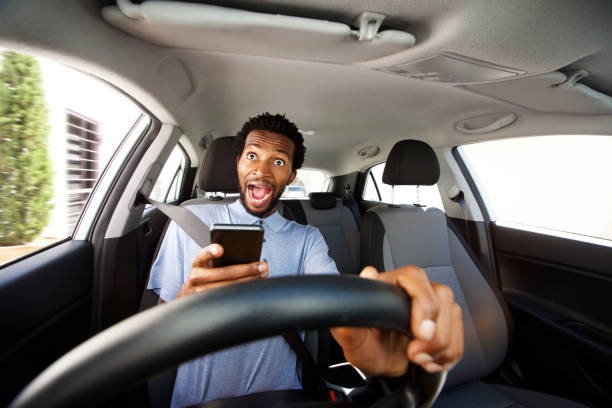
In 2020, 396 people were killed in crashes that were directly attributed to texting and driving.
5 Dumbest Ways to Die
Trying to catch a knife
This category highlights the sheer folly of the human reflex, specifically the terrible, unthinking instinct to try and retrieve something precious before it hits the floor. Did you know a surprising number of people have been fatally injured simply by attempting to catch a falling knife?
It happens in a split second: you drop a large kitchen knife, your brain bypasses all common sense, and your hand shoots out to snatch it from the air. This reflex is known as the "save," and when dealing with sharp objects, it is spectacularly bad. The problem is that gravity accelerates the blade, and by trying to grab it, you often manage to provide the perfect leverage for the falling point or edge to slice deeply into your palm, wrist, or arm. This quick, catastrophic injury often involves major arteries, leading to rapid blood loss. This classification is a tribute to the power of reflex over reason, proving once and for all that when a knife falls, the best course of action is to step back and let the floor take the loss.
Texting while driving
In an era defined by constant connection, this category perfectly captures the danger of placing digital engagement over physical survival. Texting while driving is consistently cited as one of the most reckless preventable causes of death on the road, turning a simple distraction into a deadly gamble.
The issue isn't just the few seconds your eyes are off the road; it's the cognitive distraction. Your brain is literally unable to process the two complex tasks simultaneously. When you’re drafting a quick "omw" or reading an emoji, you’re experiencing inattentional blindness—even if your eyes are technically on the road, your mind isn't registering the sudden brake lights, the pedestrian, or the sharp curve ahead. This obsession with immediate digital communication has turned the car into a multi-ton projectile controlled by someone looking at a small screen, leading to catastrophic, avoidable accidents. This death is classified as "dumb" because the message is rarely ever worth the instant, permanent consequences.
Drinking and driving
This category addresses the deadly combination of impaired judgment and high-speed machinery. Drinking and driving is frequently near the top of any list detailing preventable, tragic deaths because it hinges entirely on a voluntary, terrible decision.
Alcohol severely impairs the three skills necessary for safe driving: coordination, reaction time, and judgment. When you are intoxicated, your ability to track moving objects diminishes, your steering becomes erratic, and crucially, your reaction time slows significantly just when you need it most. Worst of all, alcohol gives you a false sense of confidence, leading drivers to take greater risks while being less capable of handling them. This isn't an accident caused by faulty machinery or poor weather; it is an entirely self-inflicted catastrophe. It is classified as dumb because the decision to get behind the wheel while impaired is the single most avoidable and devastating mistake a person can make, often resulting in tragedy for multiple innocent parties.
Swimming alone in dangerous waters
This category is dedicated to the failure of the "buddy system," a rule that is simple, effective, and tragically ignored by far too many people. Swimming alone, especially in open, natural water like oceans, lakes, or rivers, exponentially increases the risk of a fatal accident.
Why is it so dumb? Because drowning is often silent and quick. In open water, you face unpredictable and invisible threats: sudden cramps, hidden rip currents, unexpected cold water shock, or underwater obstacles. Even strong swimmers can suffer an immediate medical event. When you are alone, there is no one to spot the warning signs, no one to haul you back to shore if you cramp up, and no one to call for immediate help. The lack of an immediate, aware witness is the fatal flaw here. This death is classified as dumb because the tragedy occurs not because of a monster or a storm, but simply because of the choice to skip the easiest, most basic safety precaution in aquatic environments.
Trying to pet a wild animal
This category is dedicated to the deadly blend of hubris, ignorance, and the modern desire for a wildlife selfie. Simply put, wild animals are wild, and trying to treat a bear, bison, elk, or crocodile like a friendly golden retriever is one of the quickest ways to earn yourself a fatal encounter.
These incidents frequently happen in places like national parks, where tourists ignore explicit warnings just to get close enough for a photo op. The underlying stupidity is two-fold: first, you fail to recognize the animal's massive size, speed, and defense instincts; second, you fail to read the animal's behavior (pinning ears, heavy breathing, pawing the ground) as a clear threat display. The animal views a human approaching its young or invading its space not as a friend, but as a predator or a direct threat. The result is often a quick, violent attack that is 100% preventable. It is classified as dumb because it is a tragedy born from a failure to respect the natural world, all for a picture that rarely looks good anyway.

So there you have it: five examples of tragic, yet utterly preventable ways people have met their end, all stemming from a momentary lapse in judgment. We’ve highlighted the dangers of our worst reflexes, like trying to catch a falling knife, and the catastrophic consequences of voluntary impairment, like drinking or texting while driving. We closed with the classic errors of environmental hubris: underestimating the water and overestimating our friendship with wildlife.
What ties these bizarre and sad incidents together is a fundamental truth: the greatest danger to humans often isn't an alien invasion or a natural disaster, but our own failure to apply basic common sense. Life is inherently risky, but many of the world’s most avoidable tragedies stem from ignoring simple safety signs or prioritizing a quick text over the continued function of one’s own heart and lungs.
Next time you are tempted to break a simple safety rule, remember the fallen. Sometimes, the difference between a good day and a deadly headline is simply deciding to let the knife fall.