
5 most expensive coins sold at auction
COLLECTIONFEATURED
If you are interested in participating in a coin auction, there are a few things you should keep in mind. First, you will need to do your research and learn about the different types of coins that are available. You should also understand the grading system for coins, so that you can assess the value of the coins you are bidding on. Finally, you will need to decide how much you are willing to spend on the coins you are interested in.
Coin auctions can be a great way to buy rare and valuable coins. However, it is important to do your research and understand the risks involved before you participate.
5 most expensive coins sold at auction
1804 Bust Dollar: $7.68 million (August 2021)
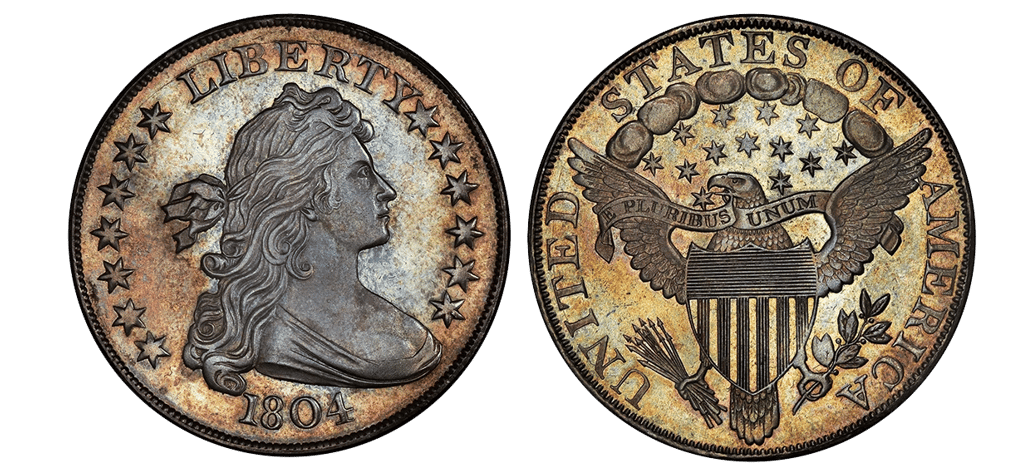
Okay, let's talk about the 1804 Bust Dollar. This isn't just any old coin; it's a legendary piece of American numismatic history, shrouded in a bit of mystery and commanding serious respect (and serious money!) in the coin collecting world.
Imagine holding a piece of history in your hand. The 1804 Bust Dollar, despite its name, wasn't actually made in 1804 for general circulation. That's the first interesting wrinkle! Production of silver dollars had been suspended a few years earlier. Instead, these were struck decades later, primarily in the 1830s, as diplomatic gifts for foreign dignitaries. Think of it as a sort of early American ambassador, a shiny representation of the young United States.
The "Bust" part of the name refers to the design featuring a depiction of Lady Liberty with flowing hair, a classical and patriotic image. What makes these coins so valuable is their rarity and the story behind them. They were never intended for the public, so the mintages were extremely limited, only a handful exist.
The intrigue doesn't stop there! The 1804 dollars are classified into different "classes" based on slight variations, adding another layer of complexity and fascination for collectors. Each class has its own backstory, and their values vary considerably, ranging from millions of dollars for the finest specimens to hundreds of thousands for more common varieties.
Owning an 1804 Bust Dollar is like owning a piece of art, a valuable historical artifact, and a fascinating enigma all rolled into one. It's a conversation starter, a symbol of wealth, and a testament to the captivating world of coin collecting. It's a coin that gets people talking and dreaming, and it's a true icon in the world of numismatics. It's something you don't just own, you steward for future generations.
1822 Half Eagle: $8.4 million (March 2021)
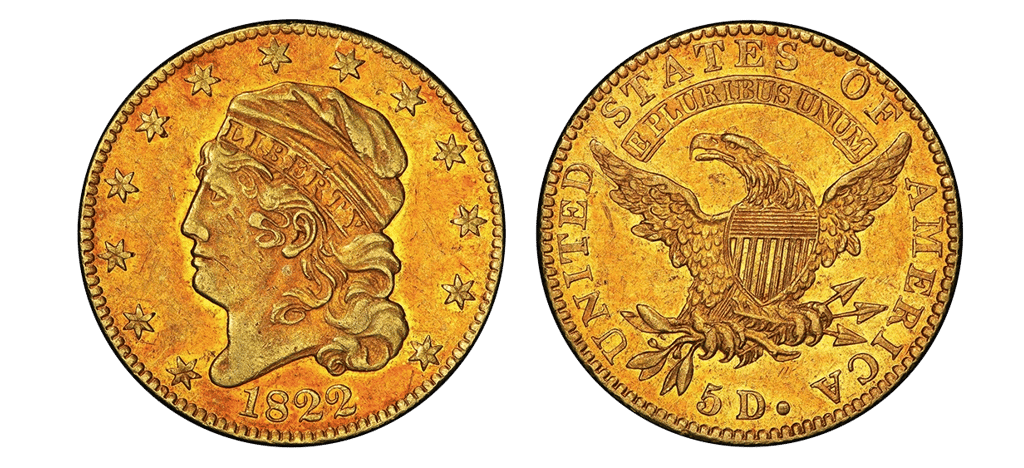
Alright, let's dive into the fascinating world of the 1822 Half Eagle! This isn't your run-of-the-mill gold coin; it's a legendary rarity and a truly special piece of American history.
Imagine holding a tangible piece of the early United States in your palm. The 1822 Half Eagle, with its $5 face value, represents a time when gold coins were a vital part of everyday commerce (well, for those who had access to them!). But what makes this particular coin so desirable is its scarcity.
The story goes that the U.S. Mint produced a little over 17,000 of these coins in 1822. However, a significant portion of these were later melted down. This means that only a tiny fraction survived the test of time, and of those, most are in less-than-ideal condition.
What does this coin look like? You'd find a capped bust of Liberty on the obverse (front) and a majestic eagle on the reverse (back). It's a classic, elegant design that's characteristic of the early 19th century.
Now, here's the kicker: Today, it's believed that only three 1822 Half Eagles exist in private hands! The other two are locked away in the National Numismatic Collection at the Smithsonian Institution. Think about that for a second – you're talking about a coin that's rarer than many famous gemstones.
Owning an 1822 Half Eagle isn't just about owning a gold coin; it's about owning a piece of American folklore. It's a connection to a bygone era, a symbol of incredible wealth, and a testament to the enduring allure of rare coins. If one ever comes up for sale, you can bet the world's most serious coin collectors will be lining up to bid. It's the kind of coin that makes headlines and inspires awe.
1787 Brasher Doubloon: $9.36 million (January 2021)
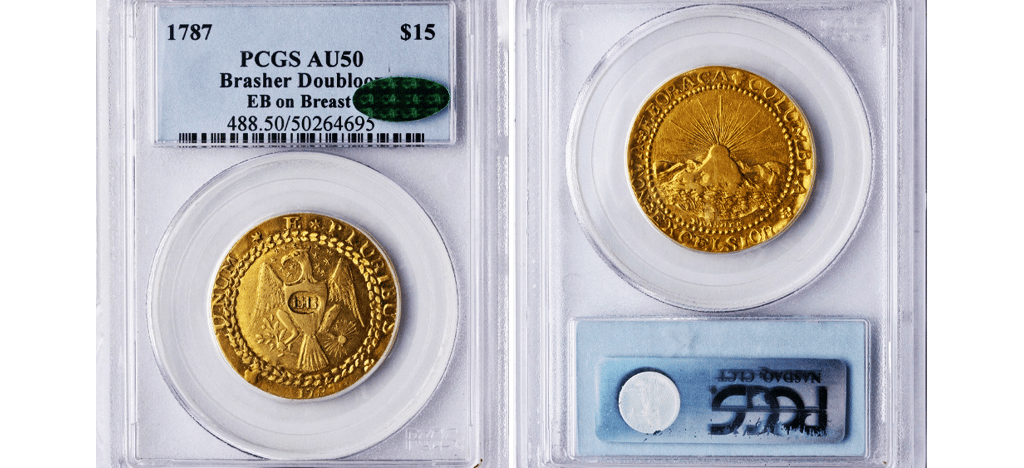
Okay, let's talk about the 1787 Brasher Doubloon - a coin that's basically a rockstar in the world of numismatics! Forget your everyday pocket change; this is in a whole different league.
Imagine a time when the United States was brand new, still finding its footing. That's the era of the Brasher Doubloon. It wasn't an official government-issued coin, though. Instead, it was a privately minted gold coin created by a talented and ambitious silversmith and goldsmith named Ephraim Brasher in New York City. Think of it as a really impressive prototype!
What makes it so special? Several things. First, it's extremely rare. Only a handful are known to exist, maybe seven or eight depending on the specific variety. That's scarcity on a whole other level.
Second, it's absolutely gorgeous. The design is striking and somewhat unconventional for the time. It typically features an eagle, sometimes with a shield, and Brasher's own hallmark punch, which is usually his initials "EB." This hallmark is a signature, like an artist signing their masterpiece.
There's one famous variety where Brasher's hallmark is prominently displayed on the eagle's breast, and that's the one that really captures the imagination. It has sold for millions of dollars at auction, becoming a symbol of the incredible value that rare coins can command.
The Brasher Doubloon is more than just a coin; it's a piece of early American history, a work of art, and a testament to the entrepreneurial spirit of the time. It represents the birth of a nation, the ingenuity of its craftsmen, and the enduring appeal of rare and beautiful objects. If you ever come across one, you've basically found a gold-plated unicorn!
1794 Flowing Hair Silver Dollar: $10 million (January 2013)
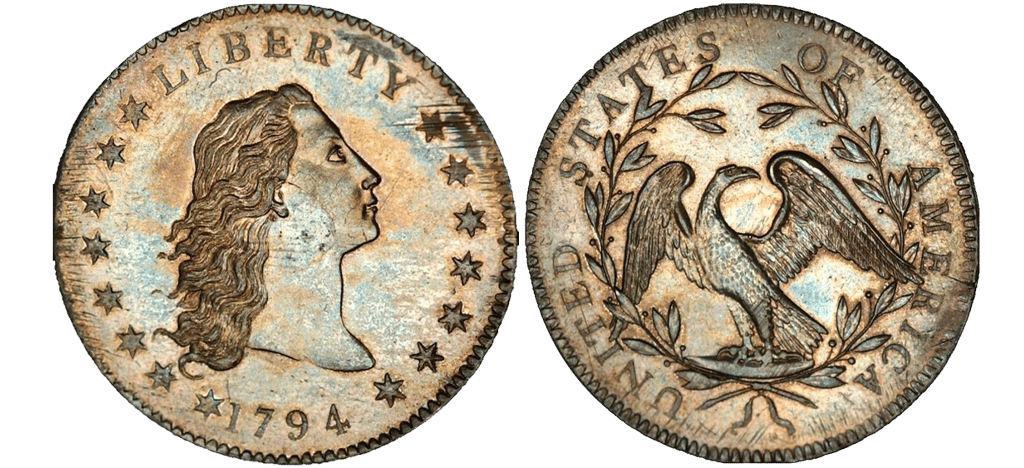
Alright, let's dive into the allure of the 1794 Flowing Hair Silver Dollar. This isn't just a coin; it's like holding a piece of the very foundation of the United States!
Imagine this: The U.S. Mint is brand new, barely up and running. The country itself is still finding its identity. In 1794, they strike their very first silver dollars. That's what we're talking about! It's a monumental moment in American history, and the Flowing Hair Dollar is the tangible representation of it.
What does it look like? The "Flowing Hair" refers to Lady Liberty's hairstyle on the obverse (front). Her hair is depicted as, well, flowing freely in the breeze. It's a romantic, almost classical image. On the reverse (back), you'll find an eagle perched on a rock, surrounded by a wreath. It's a design that's both simple and elegant.
Now, why is it so sought after? First, it's the first. That's a huge deal in collecting. First editions, first issues – they always carry a premium. Second, the mintage was relatively low. Historians estimate that only around 1,758 of these coins were ever struck. Compare that to the billions of coins that are minted today!
And third, the condition is everything. These coins were actually used in commerce (unlike some of the ultra-rare presentation pieces we've discussed). So, finding one in excellent condition is incredibly difficult. Some of the finest known examples have sold for millions of dollars, making them among the most valuable coins in the world.
Owning a 1794 Flowing Hair Silver Dollar is like owning a piece of the American dream. It's a direct link to the founding of the nation, a symbol of innovation, and a testament to the enduring value of history. It's not just a coin; it's a treasure. It's a piece that any serious coin collector would dream of having in their collection.
1933 Double Eagle: $18.9 million (June 2021)
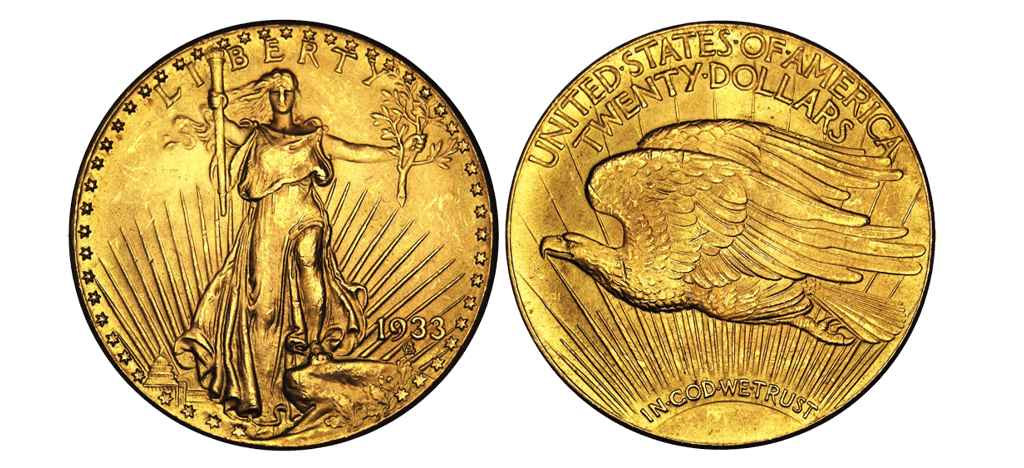
Alright, let's unravel the mystery of the 1933 Double Eagle. This is a coin that's as captivating as it is controversial!
Imagine this: It's 1933, the height of the Great Depression. President Franklin D. Roosevelt is trying to stabilize the economy, and one of his measures is to take the U.S. off the gold standard. This meant that gold coins, including the beautiful $20 Double Eagle, were no longer circulating.
Now, here's where the story gets interesting. The U.S. Mint actually did strike over 445,000 Double Eagles in 1933. However, because of Roosevelt's executive order, they were supposed to be melted down. Almost all of them were... but a few slipped through the cracks.
What does it look like? The 1933 Double Eagle features the iconic Saint-Gaudens design, considered by many to be one of the most beautiful coin designs ever created. Lady Liberty strides confidently forward, holding a torch and an olive branch. On the reverse, an eagle soars powerfully against the rising sun.
The problem? It was illegal to own a 1933 Double Eagle. For decades, they were considered contraband. However, one specimen made its way into the hands of a private collector and, after a long legal battle with the U.S. government, was eventually deemed legal to own.
This legal 1933 Double Eagle sold for a staggering sum at auction, making it one of the most expensive coins ever sold. The others that escaped the melt remain in a legal limbo, their ownership highly questionable.
The 1933 Double Eagle is more than just a coin; it's a symbol of a tumultuous time in American history, a story of government policy, and a tale of incredible rarity and value. It's a coin that raises questions about ownership, legality, and the enduring allure of treasure. It's a coin shrouded in mystique and a reminder that even the most beautiful objects can become entangled in complex historical events.
So, when you step back and look at these legendary coins – the 1804 Bust Dollar, the 1822 Half Eagle, the 1787 Brasher Doubloon, the 1794 Flowing Hair Dollar, and the 1933 Double Eagle – you see a common thread. They're not just shiny pieces of metal; they're snapshots of American history, art, and even intrigue.
They represent different eras, from the fledgling days of the nation to the depths of the Great Depression. They tell stories of presidents, entrepreneurs, and ordinary people trying to make their way in the world. They're testaments to craftsmanship, innovation, and the enduring human fascination with rarity and value.
What makes them so compelling isn't just the price tag, but the stories behind them. They spark our imaginations and connect us to the past in a tangible way. They remind us that history isn't just dates and events in a textbook; it's a collection of human experiences, captured and preserved in these remarkable pieces.
For collectors, these coins are more than just investments; they're heirlooms, treasures to be studied, cherished, and passed down to future generations. They're a way to keep the stories alive, to ensure that these pieces of American history continue to inspire and captivate for years to come. Ultimately, these aren't just coins; they're time capsules, each holding a unique and invaluable piece of the American narrative.
