
5 Most Expensive Treasures Found by Accident
COLLECTIONFEATURED
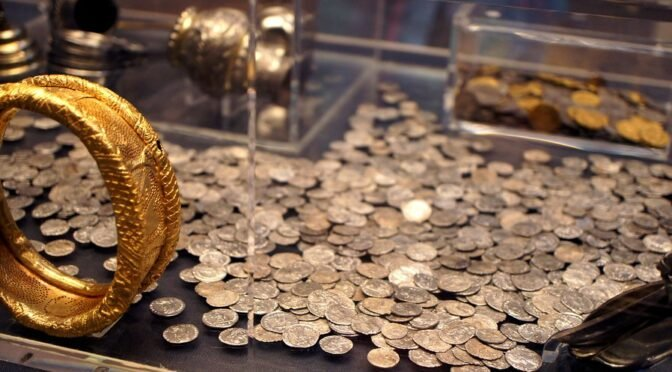
Treasure finds by accident are not uncommon. In fact, there have been many famous cases of people finding valuable treasures while they were not even looking for them.

5 most expensive treasures Found by Accident
The Hoxne Hoard
Okay, let's journey across the Atlantic and dig into the story of the Hoxne Hoard! This isn't a single coin, but a massive treasure trove that gives us an incredible glimpse into life in Roman Britain.
Imagine you're a farmer in the small village of Hoxne, England, back in 1992. You lose your hammer, and while searching with a metal detector, you stumble upon something far more significant than your lost tool! That "something" turned out to be one of the largest hoards of Roman gold and silver ever discovered in Britain – the Hoxne Hoard.
What was actually in the Hoxne Hoard? Oh, just a few things:
Thousands of coins: We're talking over 14,000 Roman gold, silver, and bronze coins dating from the 4th and 5th centuries AD. That's a lot of ancient spending money!
Silver tableware: Exquisite silver bowls, cups, spoons, and ladles, beautifully decorated with scenes from Roman mythology and everyday life. These weren't everyday dishes; they were luxurious items owned by someone of considerable wealth.
Jewelry: Gold bracelets, necklaces, rings, and intricately crafted pendants, often adorned with precious stones. Think of them as the Roman version of bling!
Toiletries: Perfume bottles, cosmetic containers, and other items used for personal grooming. Even in ancient times, people cared about their appearance.
Handles and fittings: Small bronze and silver pieces likely from furniture or boxes.
Why was it buried? That's the big mystery! Historians believe the hoard was likely buried by a wealthy Roman family for safekeeping, perhaps during a period of unrest or invasion. It's possible they intended to return for it later, but never had the chance.
What makes the Hoxne Hoard so important? It provides invaluable insights into Roman society, economy, and artistic tastes. It tells us about the kinds of goods that were being traded, the levels of wealth that existed, and the artistic skills of Roman craftsmen. It's like a time capsule, giving us a direct connection to a world that vanished centuries ago.
The entire Hoxne Hoard is now housed in the British Museum in London, where it's one of the most popular and important exhibits. It's a reminder that sometimes, the greatest discoveries are made when you're not even looking for them! It is an absolutely invaluable peek into a lost world.
The Staffordshire Hoard
Okay, let's journey to the English countryside again, but this time to uncover the incredible Staffordshire Hoard! This isn't about Roman refinement; it's a gritty, warlike glimpse into the Anglo-Saxon era.
Imagine you're a metal detectorist searching a field in Staffordshire, England, in 2009. Instead of finding a lost button or a Roman coin, your detector screams with the signal of something truly extraordinary: the Staffordshire Hoard!
What exactly was found? Prepare for a treasure unlike any other:
Military Fittings: This is the heart of the hoard. Thousands of gold and silver objects, mostly fittings from Anglo-Saxon weapons and armor. Think pommel caps from swords, helmet cheek pieces, and decorative strips that would have adorned shields.
Christian Objects: Surprisingly, amidst all the martial gear, there were also a few Christian objects, including a gold cross. This hints at the complex religious landscape of the time.
High-Quality Craftsmanship: The objects are incredibly detailed and skillfully made. They feature intricate patterns, inlaid gemstones, and delicate filigree work. These were clearly items owned by high-status individuals.
What's missing? Here's the interesting part: There were very few female-related items and no coins. This suggests that the hoard wasn't buried for safekeeping in the traditional sense, but rather represented the spoils of war or a ritual offering.
Why was it buried? That's still a matter of debate among historians and archaeologists. Some believe it was a collection of war booty deliberately buried after a major battle. Others suggest it was a ritualistic offering to the gods, perhaps to mark the end of a conflict or to ensure future success in war.
What makes the Staffordshire Hoard so significant?
Scale and Wealth: It's the largest hoard of Anglo-Saxon gold ever discovered. The sheer amount of precious metal is staggering, indicating the wealth and power of the individuals involved.
Anglo-Saxon Warfare: It provides unprecedented insight into Anglo-Saxon warfare, weapon technology, and military culture.
Art and Craftsmanship: The hoard showcases the incredible skill and artistry of Anglo-Saxon metalworkers.
The Staffordshire Hoard is a window into a violent and fascinating period of English history. It's a reminder that even in the so-called "Dark Ages," there was incredible artistry and sophistication. It's a treasure that continues to challenge our understanding of Anglo-Saxon England and a testament to the power of archaeology to reveal the secrets of the past. It's a world away from the Hoxne Hoard, showing an entirely different side of life from the same era.
The Atocha
Alright, let's trade dry land for the deep blue sea and explore the legendary shipwreck of the Nuestra Señora de Atocha! This isn't just a hoard; it's a sunken treasure ship filled with stories of adventure, tragedy, and incredible riches.
Imagine this: It's 1622. The Spanish galleon Nuestra Señora de Atocha is laden with treasure, sailing from Havana, Cuba, back to Spain. She's carrying gold, silver, emeralds, and countless other valuables, accumulated from the New World colonies. But disaster strikes: a hurricane hits, and the Atocha is driven onto a reef and sinks, taking hundreds of lives and her precious cargo to the bottom of the ocean.
For centuries, the Atocha lay lost and forgotten on the seabed. Many tried to find her, but the exact location remained a mystery.
Then, in 1985, after decades of searching, treasure hunter Mel Fisher and his crew finally made the discovery of a lifetime: They found the main wreckage of the Atocha!
What did they find? Prepare to be amazed:
Tons of Silver: Silver bars and coins, literally tons of it! Many of the coins were perfectly preserved and still gleam with their original luster.
Gold Ingots and Artifacts: Gold bars, chains, jewelry, and religious objects, all crafted with exquisite detail.
Emeralds: Some of the finest emeralds ever discovered, ranging in size and quality. These gems were prized by the Spanish Crown.
Cannons and Weapons: Iron cannons, muskets, and other weapons, providing a glimpse into the ship's defenses.
Personal Items: Everyday items like navigational tools, pottery, and even personal belongings of the crew and passengers, offering a poignant reminder of the human lives lost.
Why is the Atocha such a big deal?
Scale of the Treasure: The sheer amount of gold, silver, and emeralds recovered from the Atocha is staggering, making it one of the most valuable shipwrecks ever discovered.
Historical Significance: The Atocha provides invaluable insights into the Spanish colonial era, maritime trade, and the dangers of seafaring in the 17th century.
Human Drama: The story of the Atocha is filled with tragedy, perseverance, and the enduring allure of sunken treasure.
The Atocha is more than just a shipwreck; it's a time capsule that has captivated the world for centuries. It's a story of greed, loss, and the enduring power of the ocean. The treasure recovered from the Atocha continues to be displayed in museums and sold at auction, reminding us of the riches that lie hidden beneath the waves and the enduring fascination with sunken treasure. It's a far cry from buried hoards, being spread over a wide area and exposed to the ravages of the sea.
The Mary Rose
Alright, let's set sail once more, but this time to explore a very different kind of shipwreck: the Mary Rose! This isn't about gold and jewels; it's about a glimpse into the daily lives of sailors and soldiers aboard a Tudor warship.
Imagine you're in Portsmouth, England, in 1545. King Henry VIII is watching his fleet sail into battle against the French. The Mary Rose, one of the king's favorite warships, suddenly capsizes and sinks before his very eyes, taking hundreds of men down with her. The cause of the sinking has been debated for centuries, but it's generally believed that the ship was overloaded and unstable.
For over 400 years, the Mary Rose lay buried in the mud of the Solent, the strait separating the Isle of Wight from mainland England. Over time, the ship became a time capsule, preserving a snapshot of Tudor life.
Then, in 1982, after years of meticulous planning and excavation, the Mary Rose was dramatically raised from the seabed!
What was found inside? Prepare for an extraordinary glimpse into the Tudor world:
The Ship Itself: A large portion of the ship's hull was remarkably well-preserved, providing invaluable insights into Tudor shipbuilding techniques.
Weapons and Armor: Cannons, longbows, arrows, swords, and armor, revealing the weaponry and fighting tactics of the Tudor navy.
Personal Belongings: Clothing, shoes, tools, musical instruments, games, and even the personal possessions of the crew and soldiers. These items provide a poignant glimpse into the lives of the men who served aboard the Mary Rose.
Navigational Instruments: Compasses, astrolabes, and other tools used for navigation, showcasing the scientific knowledge of the time.
Provisions: Remains of food and drink, including barrels of beer, dried fish, and preserved meats, revealing the diet of Tudor sailors.
Human Remains: The skeletons of many of the crew and soldiers who perished in the sinking, providing valuable information about their health, diet, and even their last moments.
Why is the Mary Rose so important?
Tudor Life: It offers an unparalleled glimpse into life in Tudor England, from shipbuilding and warfare to everyday life and personal possessions.
Naval History: It provides invaluable insights into Tudor naval technology, tactics, and the lives of sailors and soldiers.
Archaeological Significance: The excavation and preservation of the Mary Rose was a monumental archaeological achievement.
The Mary Rose is more than just a shipwreck; it's a time machine that transports us back to the Tudor era. It's a reminder of the power and glory of the English navy, the dangers of seafaring, and the human lives that were lost at sea. The Mary Rose Museum in Portsmouth is now a world-renowned attraction, allowing visitors to see the ship and its artifacts up close and personal. It's a different kind of treasure, being the remains of the ship itself and the everyday items of its crew, not gold or jewels. The real treasure is the insight into the past that it provides.
The Terra-Cotta Army
Alright, let's travel far east, to China, and delve into the awe-inspiring world of the Terra-Cotta Army! This isn't a hoard or a shipwreck; it's an entire underground army built to protect an emperor in the afterlife!
Imagine this: It's 1974. Farmers digging a well near Xi'an, China, stumble upon something extraordinary: fragments of pottery figures. Little do they know, they've just unearthed one of the greatest archaeological discoveries of the 20th century: the Terra-Cotta Army of Qin Shi Huang, the first Emperor of China!
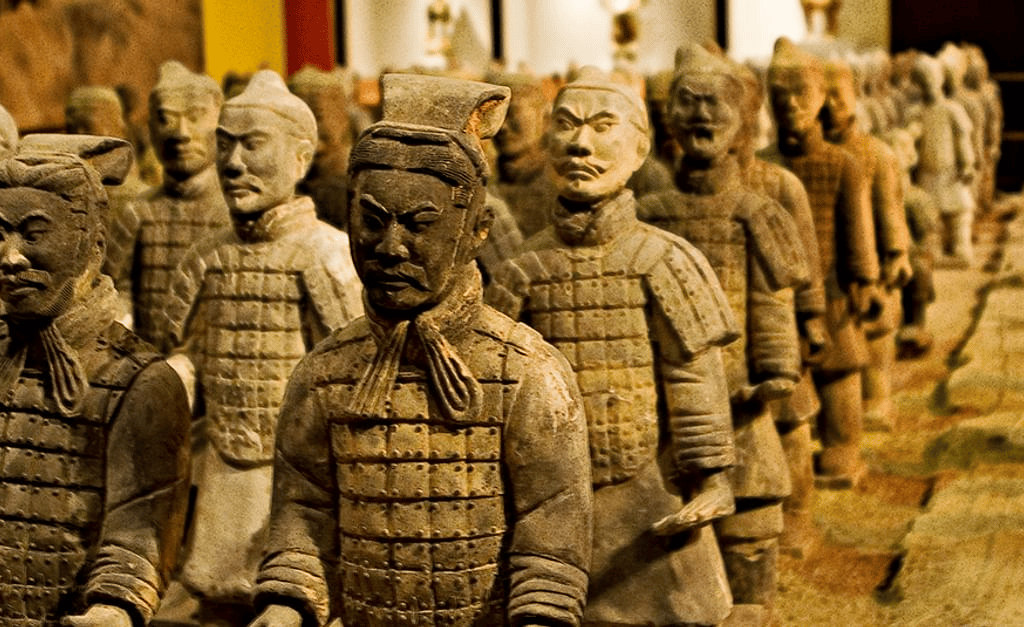
What exactly is the Terra-Cotta Army? It's an enormous collection of life-sized terra-cotta sculptures depicting the armies of Qin Shi Huang, who ruled from 221 to 210 BC. The army was buried with the emperor in his mausoleum, intended to protect him in the afterlife.
What does it consist of? Prepare to be amazed by the scale:
Thousands of Soldiers: Over 8,000 terra-cotta soldiers, each unique in appearance and expression. They stand in battle formation, ready to defend their emperor.
Horses and Chariots: Hundreds of terra-cotta horses and chariots, complete with bronze fittings and weapons.
Officials and Acrobats: Figures representing government officials, musicians, and acrobats, reflecting the court life of the Qin Dynasty.
Weapons: Real weapons, including swords, spears, and crossbows, were buried with the army.
An Elaborate Mausoleum: The Terra-Cotta Army is just one part of a vast mausoleum complex that includes underground palaces, stables, and other structures. The emperor's tomb itself has never been fully excavated.
Why is the Terra-Cotta Army so significant?
Scale and Detail: The sheer size and detail of the army is breathtaking. Each soldier is unique, with individual facial features, hairstyles, and clothing.
Qin Dynasty History: It provides invaluable insights into the Qin Dynasty, its military organization, and its artistic achievements.
Cultural Significance: The Terra-Cotta Army is a symbol of China's rich history and cultural heritage.
The Terra-Cotta Army is more than just an archaeological site; it's a testament to the power, ambition, and artistic achievements of one of China's most important emperors. It's a reminder of the enduring human desire for immortality and the lengths to which people will go to achieve it. The site is now a UNESCO World Heritage Site and a major tourist attraction, drawing visitors from around the globe. It’s a truly breathtaking feat of engineering and artistry, different from hoards in that it was intentionally placed and organized, not lost or hidden.
Looking back at these diverse discoveries - the Hoxne Hoard, the Staffordshire Hoard, the Atocha, the Mary Rose, and the Terra-Cotta Army - a fascinating picture emerges. While vastly different in their origin, contents, and context, they all share a common thread: they offer a powerful, tangible connection to the past.
They reveal the richness and complexity of human history, beyond dates and names in textbooks. They show us how people lived, what they valued, what they feared, and what they dreamed of. From the exquisite tableware of Roman Britain to the brutal weaponry of Anglo-Saxon warriors, from the glittering gold of a Spanish galleon to the personal belongings of Tudor sailors, and from the silent ranks of the Terra-Cotta Army, we see reflections of ourselves in the lives of those who came before us.
These discoveries remind us that history is not just about kings and queens or battles and treaties. It's about ordinary people going about their daily lives, facing challenges, and leaving their mark on the world. They show us the ingenuity of human craftsmanship, the enduring power of human ambition, and the universality of human emotions.
Ultimately, these treasures are more than just artifacts; they're stories waiting to be told. They invite us to imagine, to speculate, and to connect with the past in a way that no textbook ever could. They are testaments to the enduring power of archaeology to unlock the secrets of the past and to enrich our understanding of the human experience. Each discovery, in its own unique way, contributes to a richer, more nuanced understanding of who we are and where we come from.